
SME Cash Flow Management: 5 Key Tips to Avoid Financial Stress
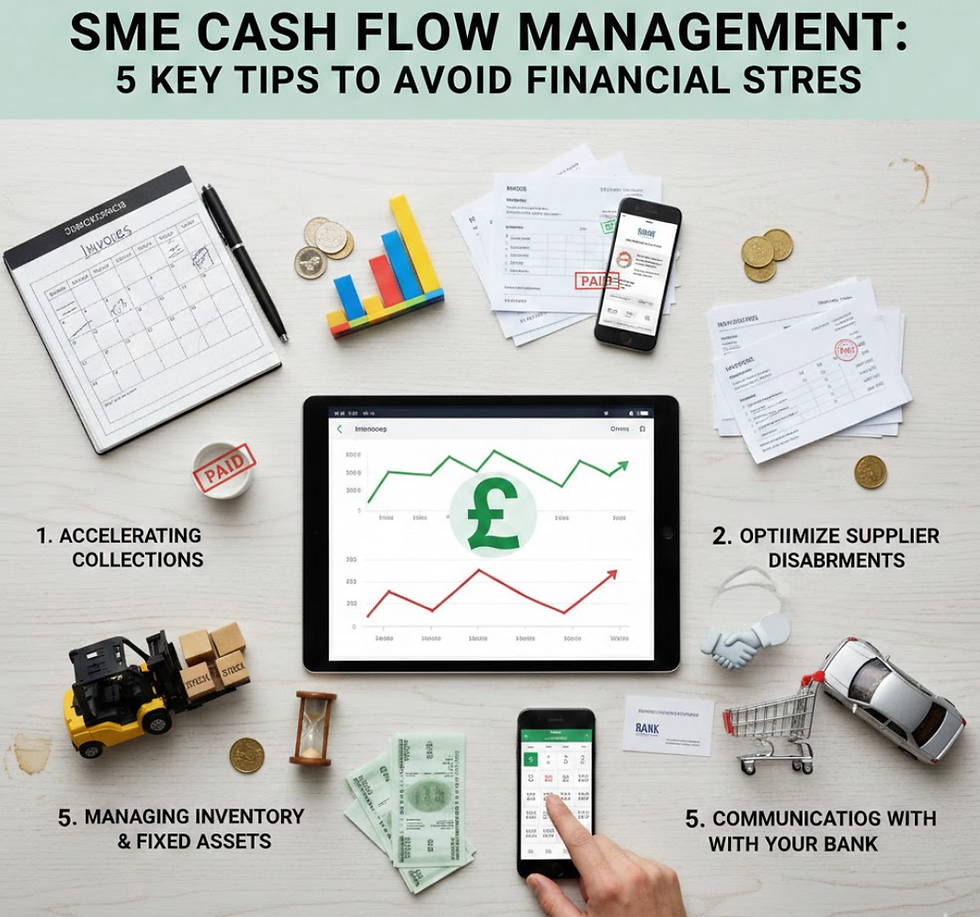
Introduction: The Beating Heart of Your Business
Cash flow is the lifeblood of any Small and Medium-sized Enterprise (SME). Having a solid balance sheet is one thing, but having the necessary liquidity at the right time is another. A lack of available funds can cripple your operations, even if the business is fundamentally profitable. Fortunately, good cash management is not reserved for large corporations. Here are five concrete steps to optimize your cash movements.
1. The Dashboard: Forecast to Rule
One of the biggest pitfalls is managing your cash flow day-to-day. The essential tool here is the Cash Flow Forecast Budget.
Create a table (often monthly) listing all inflows (customer receipts, subsidies, loans) and outflows (supplier payments, salaries, taxes, rent).
Project your cash position over the next 3 to 12 months. This allows you to identify critical periods (the "troughs") well in advance and take proactive measures (negotiating credit lines, postponing investments).
Pro Tip: Update this dashboard at least once a month to adjust your forecasts to reality.
2. Accelerate Customer Collections
The Days Sales Outstanding (DSO) has a direct impact on your cash flow. The shorter it is, the better.
Invoice Immediately: Don't wait until the end of the month. As soon as the service is rendered or the goods are delivered, send the invoice.
Clear Terms: Clearly state the payment deadlines and late payment penalties on your quotes and invoices.
Early Follow-up: Implement a structured collection process. A simple call or email a few days before the due date can make all the difference.
Encourage Fast Payment: Offer a small discount if the client pays immediately (e.g., 2% for payment within 7 days).
3. Optimize Supplier Disbursements
On the flip side, you can use supplier payment terms to your advantage.
Negotiate Terms: Within reason and the legal framework, negotiate longer payment terms (e.g., 60 days instead of 30).
Respect the Due Date: Pay your suppliers on the day the invoice is due—not too early, not too late. Paying too early unnecessarily ties up cash; paying too late harms your reputation and may incur penalties.
Automate Recurring Payments: Ensure fixed expenses (rent, subscriptions) are correctly planned to avoid surprises.
4. Manage Inventory and Fixed Assets
Immobilized capital is money that is not circulating.
Inventory: Maintain an optimal stock level. Too much inventory means idle cash and storage costs; too little means a risk of stockouts and lost sales.
Investments: Where possible, favor leasing (finance lease or operating lease) or renting over the outright purchase of expensive equipment. This smooths out expenses and preserves your working capital.
5. Communicate with Your Bank
Don't wait until you're in the red to contact your bank advisor.
Establish a trusting relationship.
Discuss short-term financing solutions in advance, such as factoring (selling receivables) or securing an overdraft facility to cover periods of cash tightness.
Conclusion: Control Brings Serenity
Cash flow management is an ongoing discipline, not a one-time task. By applying these five principles—forecasting, accelerating, optimizing, reducing tied-up capital, and communicating—you will gain visibility and peace of mind, allowing your SME to grow on solid financial footing.


Comments